Blog #7~

Image result for funny gif
last blog post !

Give us the author, title, and main character names.

Title– Invisible Man
Author– Ralph Ellison
Main Characters– The Narrator, Jack, Clifton, Ras, Dr. Bledsoe, Mr. Norton, Mary, and Sybil

Plot Summary

Invisible Man by Ralph Ellison is about an unnamed black narrator born and raised in the South in the late 20s/early 30s going through a series of racially unjust events targeted towards either himself or blacks around him. This book is told in first person POV and told through a series of flashbacks as if in the form of old memories of the narrator. Our main character refers to himself as invisible due to outsiders refusing to actually see him, they might interact with him but they don’t see him as more than just some black stereotype. We follow the narrator’s journey “from Purpose to Passion to Perception” meaning him going from being blind/ignorant to being able to see/be more aware. The narrator lives underground using electricity from the Monopolated Light & Power Company and listens to Louis Armstrong through a phonograph.

Important Series of Events:

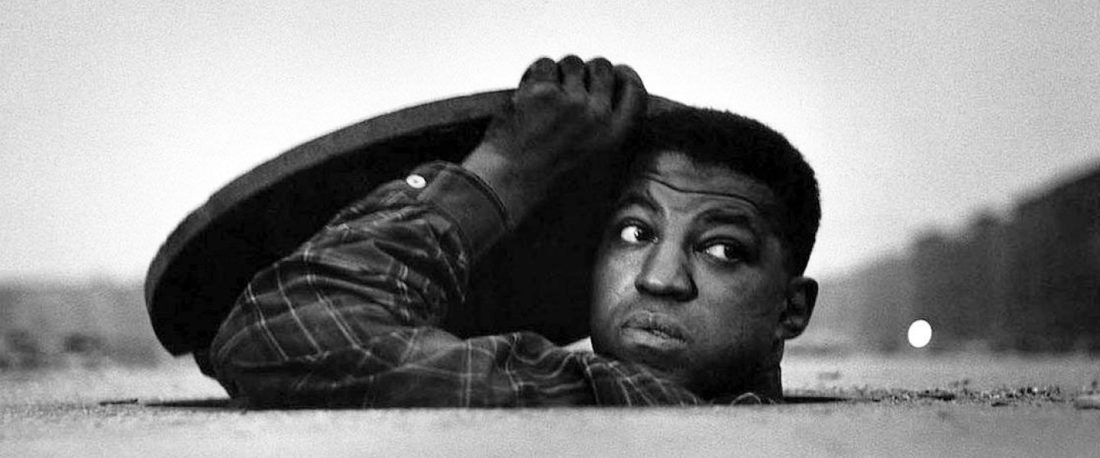
Our main character is a gifted public speaker so he is invited to give a speech to a group of important white men in his town but they turn out to be a bunch of sickos who force the narrator and other young black men into a “battle royal” with each other. Three years later, the narrator is a college student who had been asked to drive Mr. Norton, a wealthy white trustee of the college, around the campus. Dr. Bledsoe, the president at the narrator’s college, expels the narrator and sends him to New York City to search for a job with seven letters of recommendation addressed to the college’s white trustees in said city. Upon arriving, the narrator goes to the office of one of his letters’ addressees, a trustee named Mr. Emerson. There he meets Emerson’s son, who opens the letter and informs the narrator that the letters from Bledsoe portrayed the narrator as unreliable and dishonorable. Fortunately, Emerson’s son helps the narrator get a low-paying job at the Liberty Paints plant. Later on, two men fight and neglect the paint-making machine so one of the unattended tanks explodes, and the narrator is knocked unconscious and sent to the paint factory’s hospital where white doctors conduct electric shock experiments onto our main character. After leaving the hospital and collapsing in the middle of the street, our protagonist is led to Mary’s home, a kind black woman who helps fellow blacks, where she helps him and lets him stay with her for free. The narrator is put into Brotherhood and is placed in charge of advancing the group’s goals in Harlem. (More happens but this paragraph is getting too long and I don’t wanna spoil the whole book), in the end the narrator becomes involved in setting a tenement building on fire. He ran from the scene of the crime where he was confronted by Ras, who calls for the narrator to be lynched. The narrator runs from Ras where he ran into two policemen, who suspect that his briefcase contains loot from the riots. In his attempt to escape them, the narrator falls down a manhole to which the police mock him and draw the cover over the manhole. The narrator has been in said manhole ever since, he concludes that he finally realized that he must honor remain true to his own identity without sacrificing his responsibility to the community. The book ends with him saying that he finally feels ready to emerge from underground.

Give us a rating out of 5 stars. Justify that rating–why do you feel it deserves that rating?

5 out of 5 stars. This is a very well-written book, it’s use of metaphors and way of story telling is amazing. And when I’m more grown I think I’ll be able to really appreciate the book more if I ever go back and read it again cause by then I’ll probably have a better understanding of the events going on and the overall plot.

Give us a reason to actually read the book!

If you want a serious and real story that isn’t all ‘cookie cutter’ when it goes into the serious topics, I’d recommend this book. Like I said in my last blog post, this story revolves heavily around racism and inequality to black people in America. It gets straight to the point and when the narrator is in a situation where he’s being targeted for his race, the reader still feels for him and feels like they’re there with him going through it all too. Like in the first or second chapter during the scene where the powerful white men force the young black men into fighting one another and have them grab as many fake coins on an electric rug that continuously shocks them, I’ve obviously never been in that type of situation before but when I was reading it I felt like I was actually going through all this too. I couldn’t take my eyes off the page and even when the scene ended, I still felt icky inside like I actually just experienced what I had read. Few books are able to do this to the readers so I was pretty impressed by this.
Also, this book was written by Ralph Ellison, a black author, and I feel that blacks don’t get as much recognition as they deserve in a lot of fields and I love supporting other blacks as much as I can so I’ll happily read a book by a black author.
Finally, this book brings awareness to the ‘social inequality’ (a phrase our protagonist says in his speech to white men after the ‘battle royal’) in our American society which I love when books center their writings around important issues to eductate readers on things that are happening now or things that happened in the past. So if you like reading books that bring up serious discussions, this book may be your cup of tea.


Image result for clap gif
the end 😭

Blog #6~

Related image
hello !

What might have been helpful to know before reading this book?
It would have been good to know just how intellectual this book is. Tinkham mentioned that this book, even for a college level, was pretty high up there (super smart). But like I kinda just brushed it off and was like ‘Pshhh I can read it, this book ain’t too smart for me’, then after the prologue (haven’t even gotten to the first chapter yet) I was so lost. So I guess a warning to students before they pick like a “Hey, this book uses big words and metaphors and shows more than tells so choose wisely”. Which it isn’t a bad thing that this book is so well written, like that’s the whole reason why people love this book and call it a ‘classic’. Just, in my opinion, it’s not really meant for freshmen nor is it exactly at a high school level.

Is there anything else that the book didn’t address or answer that you wish it would have?
It would’ve been cool to see this book written from a white persons POV. Like two main characters, a white man and a black man. Or even two main characters, black male and black female. That would be cool to see in any book but especially this book since it’s discussing mainly racism which is a very serious topic and affects everyone of every race and having a book from two main characters of different races’ POVs, that would bring a whole nother amazing element to the book. Also seeing how differently racism affects men and women of the same race.

Why does this book matter (or does it?)?
It matters because it’s a well-written and well-told story about the challenges that black Americans face in their everyday lives. And even though this book was written in the 50s, racism is still going strong to this day and a lot of racist things that happen in this book still happen today (i.e. people not seeing the narrator’s full potential/personality due to his dark skin, blacks being undermined in general, the narrator’s friend being shot in a racially motivated attack by white officers, etc).

Why is it relevant to readers today (or is it?)?
Kinda like what I said in the answer above, it’s relevant because racism is still a thing, whether it be small things like locking your car door when a black guy walks past or big things like burning down several black churches in your local area- IT’S ALL STILL RACISM AND IT ALL STILL HAPPENS TO THIS DAY. And people need to be educated on this type of stuff and through books is a good way to go.

Expand on your answer—-why might this book be on a list of books that I gave you to choose to read? Convince Tink to keep it there or to take it off, and be specific as to why you think that way.
I’m kinda conflicted. I like this book’s message and I like the way it’s written buut, it’s still a very big-worded book and it’s very easy to get lost. I feel like this book was meant for ages 18+ not 14 and 15 year olds. I’d probably say to keep/add books to the list that tackle racism and inequality but this specific book, either take it off the list or give a big warning to students that this is a very smart book.

Image result for hi gif
ok bye.

Blog #5~

Chapter 12
Miss Mary Rambo POV

I make my way over to the young man on the ground, he just collapsed it seemed like, collapsed right there in the middle of the street. I ain’t never laid my eyes on this man before but the poor ole boy seemed so weak, I had to hep him. When I’m standing over him I ask what’s wrong while tryin to get the crowd to move away, shucks, they need to stand back and let this boy breathe. A policeman comes up to him shortly after me, we help the clearly ill boy to stand. I could smell that hospital smell right on him, and I could just about see the ether right there in his clothes. I had knowed this man wasn’t well, but he just needs some rest is all, maybe a cup of soup. I oughta git him to my home, take care of him like the heaps of others I’ve done. I ask where he from, if he lives around here. Son said he lives in that Men’s house, I shake my head. What this boy needs is a woman to keep an eye on him awhile, something that place ain’t gonna git him. Ralston, Jenny Jackson’s boy, and me start to take him back to my house, Ralston ahold of one arm and me the other. I tell the barely-awake man my name and how I’m well knowed around this part of Harlem, he’s heard of me I’m sure. Son keeps insisting he’s alright but what kind of woman would I be to let him go out and about in his condition? I tell Ralston to hep me git him inside and onto the bed, then I rush Ralston into the kitchen to get the poor boy a glass of water. It wasn’t long till the boy passed out.

____________________________________________________________

I stare hard at the newspaper in my hand, trying to focus on the words across the paper. The man in my bed has been sleeping for a good long time now. But then I see movement from across the room, I give a slow smile to the now awakened face. Son says he feels much better, I suspects all he needed was some sleep. I usher him to stay seated as I went to git him some soup from the kitchen. I come back with a bowl of soup in a plate, I reckon he ain’t git this kind of service from that Men’s House. I tell him to take his time, I enjoy the company seeing as I ain’t got nothin else to do but read the paper. Boy tells me he’s been sick for quite some time, now why would he try to hide that and tell me he’d been fine earlier? He said he didn’t want to be no trouble, I shake my head and tell him that everybody has to be trouble to somebody and that he just come from the hospital too. He got all suspicious asking how I knowed such a thing, shucks, what’s wrong with the world today with nobody trustin nobody. I had smelled the hospital smell outta him is all. Son said he from the South and that he came up here to work and go to school, but got sick. He said he wanted to be an educator but now he wanted to do something else. With a sigh I tell him I hope it’s something that’s a credit to our race. It’s the young folks what’s going to make the changes, thems the ones, they oughta lead and fight to move us all on up a little higher. I look him right in the eyes and tell him that it’s the ones from the South that’s got to do it, up here too many forgits, but them from the South knows the fire and ain’t forgot how it burns.
The boy finishes his soup but before he leaves I let him hear one last piece of advice. “Don’t let this Harlem git you. I’m in New York, but New York ain’t in me, understand what I mean? Don’t get corrupted.” I come with him to the door, and let him know that if he’s looking for a place beside that Men’s House- my rent’s reasonable.

Image result for thats all folks gif

Blog #4~

1st Allusion

Chapter One, our protagonist is expected to present a speech he wrote for his graduation in front of wealthy and important white men. He talks about how he feels about his speech and he briefly compares himself to his peers (eight other black men who aren’t giving speeches but are trying to prove themselves to these white men to gain money and respect). While doing this he says, “In those pre-invisible days I visualized myself as a potential Booker T. Washington.” This caught my eye immediately since I’m currently taking a course on African American History and Booked T. Washington was one of the main abolitionists we focused on last unit.
Booker T. Washington (born 1856, died 1915) was born a slave in South West Virginia, he started to learn how to read after being emancipated at age nine. He put himself through Hampton University and later became the first president of the Tuskegee Institute in 1881 at only age 25. He was seen as one of the main leaders for Black Americans post-Reconstruction Era and was very well respected from not on the black community but the white communities as well.

2nd Allusion

Speaking of The Reconstruction Era, on page 16, our protagonist’s grandfather decided to get something off his chest on his dying bed. What he said was pretty lengthy but one part of what was said was, “I never told you, but our life is a war and I have been a traitor all my born days, a spy in the enemy’s country ever since I gave up my gun back in the Reconstruction.” I’m still trying to figure out what the grandfather was trying to say, as well as the main character is, but I think the gist of what he was getting at was that he felt he had betrayed his people to please the whites since they have all the power and control and thought pleasing them would be best- but he later comes to the conclusion that this was a mistake and it made him a traitor to his people and a spy for the whites.
The Reconstruction Era was a historical period of time for Black Americans. Having begun in 1863 and ending in 1877. This era followed the American Civil War and many tried to redress the injustice brought from years of slavery and making many attempts to get social, political, and economic equality for African Americans. This book is set after the Reconstruction Era but still revolves around heavy cases of segregation, ignorance, and pure racism and I’m sure The Reconstruction Era will be mentioned many more times in this book.

Image result for dancing gif
the end.

Blog #3~ Bro He’s Invisible ??

What do you think happened just before your story started?
Well this book is all about racial injustice, hate crimes, and blatant racism. It takes place in the early twentieth century so slavery had ended a few centuries prior to this but America was still heavily segregated, which is what this book mainly focuses on.

Think about a setting in your book. If you were in the setting, what are some things you might see?
The setting of the book begins in the good ol’ American South. I (obviously) live in America already but I was born in 2004 so I don’t know exactly how it feels to be living in America in the early 1900’s like the main character. But I don’t think it’s really the setting of the book that Ellison wants us to focus on. In a lot of books the plot is surrounded by/fueled by the main characters’ surroundings, but with this book it’s more so revolved around how the characters are treated based solely on how they look. Much like how in real life stupid things like skin color, gender, the clothes you wear, hair color etc. impact how you will be treated in you everyday life. “Invisible Man” emphasizes the unfair treatment of Black-Americans a crap ton in a very unique way. Just the first few sentences draws me in. This book isn’t suppose to be a fantasy or crazy in the sense of it being so fictional and outlandish but instead crazy as in how real it is and how ignorant hate like this still goes on today.

List three facts about this book. Then, list three opinions about it.
Ellison states that he started this book just by typing “I am an invisible man.”.. no story behind it, nothing elaborate nor amazing thought of yet, just “I am an invisible man”. I find this fascinating because you don’t see writers doing this very often, usually when someone starts writing they have some sort of plot or plan going through their heads on what the story’s going to be from the beginning to the end. So for Ellison to just type out this one line and put so much feeling, emotion, and truth into it- I just gotta applaud him for that.
Supposedly, in 2013 “Invisible Man” was pulled from a North Carolina school because a parent claimed the book had ‘inappropriate language’ for 11th graders. I just have to roll my eyes at this, like 11th graders ?? Really ??! In 11th grade you’re almost an adult, I haven’t read through the book enough to know specifically what they were referring to but I know it can’t be that bad that almost 18 year olds shouldn’t be allowed to read it..
Ellison started this book in 1945-1942, it took 7 years to write !! That’s dedication ! And he must of had a real passion for what he was writing about in order for him to work on a novel for almost a decade. To which I gave him another set of applause for.

Blog #2~

Schedule Setup

4/11- Read for the whole class, get through chapters 1 & 2 (70 pages). If I don’t finish this in class, I’ll read at home.

4/12-  Discussion/Blogging Day in class.

4/15-  Read for the whole class, get through chapters 3 & 4 (37 pages). If I don’t finish this in class, I’ll read at home.

4/16- Community Day in class. Read chapters 5-7 (52 pages) at home.

4/17-  Blogging/Discussion Day in class. Read chapters 8-10 (68 pages) at home.

4/18- Community Day in class. Read chapters 11-13 (64 pages) at home.

4/19-  Read for the whole class, get through chapters 14-16 (59 pages). If I don’t finish this in class, I’ll read at home.

4/22- Blogging/Discussion Day in class. Read chapters 17-19 (66 pages) at home.

4/23- Community Day in class. Read chapters 20-22 (38 pages) at home.

4/24- Read for the whole class, get through chapters 23 & 24 (34 pages). If I don’t finish this in class, I’ll read at home.

4/25-  Community Day in class. Read chapter 25 (37 pages) at home.

4/26-  Read/Blogging Day- Read Epilogue (9 pages)

4/29-  Final Work Day:  Complete last blog post.

Blog #1 !!!

Soo why DID I choose to read “Invisible Man” (by Ralph Ellison) ? Well this year I wanted to learn more about what’s it like living as a black person (in America). So I took an African American History class and chose this book to read in LA class. Even though I am a mixed girl, I’m very light-skinned so I don’t really fully know what it’s like to live as a dark-skinned American, but I hope this book can I guess ‘enlighten’ me in a way about it.